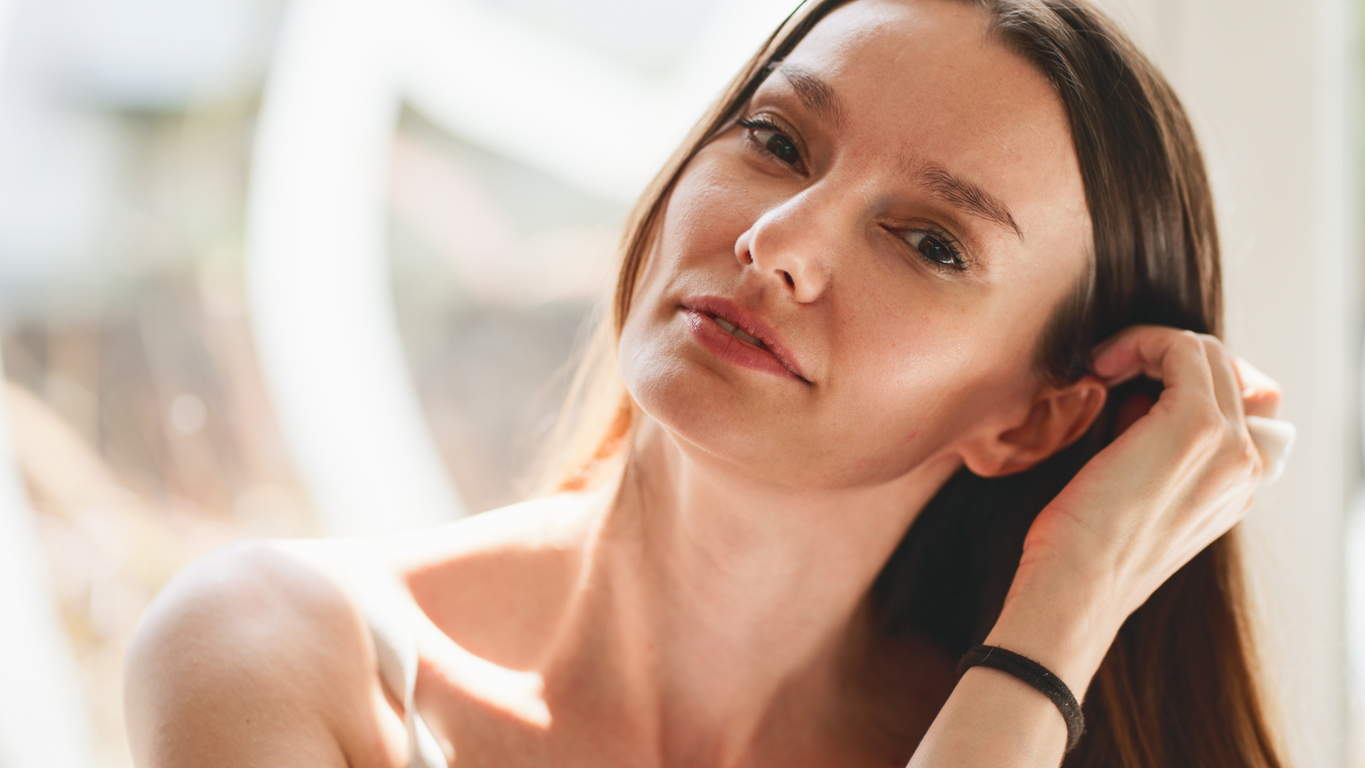
Hooded eyes don’t always start in the eyelid. In many patients, the “extra skin” you see is actually the brow drifting downward over time, pushing tissue onto the upper lid. In others, the brow position is stable, but the upper eyelid skin itself has become loose and redundant (often called dermatochalasis).
The right solution depends on the root cause: an endoscopic brow lift repositions a descended brow to reopen the eye area, while upper eyelid surgery (blepharoplasty) removes excess upper-lid skin (and sometimes fat) when the hooding is truly eyelid-based. And for some faces, the most natural result comes from combining both procedures.
At Rousso Adams Facial Plastic Surgery in Birmingham, we specialize exclusively in the face, eyes, and neck in an AAAHC-certified facility, with surgeon-led care from Dr. Daniel E. Rousso (triple board-certified) and Dr. Austin S. Adams (double board-certified). That depth of facial-anatomy expertise informs our discussion and helps us help you achieve your aesthetic aspirations.
Why “Hooding” Happens
Brow descent (brow ptosis)
As forehead tissues relax with time, the brow can settle lower. When that happens, the brow’s weight can create a shadowed, heavier upper eye, which is often mistaken as “too much eyelid skin” (Eye and Brow Lift).
Common clues:
- The outer third of the brow looks lower than it used to
- Makeup feels like it “disappears” under a heavier brow
- You look tired, upset, or stern even when you feel great
- Lifting the brow (gently, with fingertips) makes the eye look immediately more open
True eyelid skin excess (dermatochalasis)
Dermatochalasis is loose, redundant eyelid skin—a common, age-related change that can cause upper-lid hooding and, in some cases, visual obstruction (Dermatochalasis - EyeWiki).
Common clues:
- The fold of skin is clearly coming from the eyelid itself
- The brow position still looks “normal,” but the lid skin hangs over the crease
- The upper lid feels heavy late in the day
- In some cases, the excess skin can affect the superior visual field
Endoscopic Brow Lift: When the Brow Is the Real Culprit
An endoscopic brow lift is designed to restore a more youthful, rested position to the upper third of the face by addressing brow descent at its source.
Using three to four small incisions hidden in the hairline, an endoscope (a thin camera) helps your surgeon visualize the deeper support structures. The brow tissues are then elevated vertically and secured in a higher, more natural position without a long scalp incision.
An endoscopic brow lift can correct:
- “Hooding” driven by brow descent (especially laterally)
- A heavy, brooding brow
- Forehead creases and the “11s” between the brows (when appropriate)
- Upper-face fatigue that makes you look less like yourself
Eyelid Surgery: When the Eyelid Skin Is the Problem
Blepharoplasty is a surgical procedure that removes excess skin from the eyelids and may also address underlying muscle and fat, depending on the individual's anatomy. The goal is to achieve a smoother and more refreshed appearance of the upper eyelid. Incisions are typically made along the natural crease of the upper eyelid, allowing the surgeon to remove excess skin and refine the eyelid shape in a way that promotes discreet healing.
However, eyelid surgery does not address a descended brow. If a drooping brow causes eyelid hooding, simply removing eyelid skin may not yield the desired result. Instead, it could lead to under-correction or create a "pulled" appearance that does not harmonize with the rest of the face. The primary goal of the procedure is not just to remove tissue; it is to restore balance to the facial features.
When You Need Both
It’s common to see:
- A brow that has drifted down and
- Upper eyelid skin that has loosened
That’s why many patients get the most natural improvement with a strategic combination: a brow lift to restore brow position, plus blepharoplasty to refine true eyelid excess when needed. An in-person exam is the best approach because brow position, eyelid skin, fat pads, and even eyelid mechanics can all play a role.
Subtle Elevation. Thoughtful Refinement. Results That Never Look Overdone. The Difference Is In The Diagnosis.
Identifying whether the brow, the eyelid, or both is responsible for hooding requires advanced training, surgical judgment, and an artistic understanding of facial balance.
At Rousso Adams Facial Plastic Surgery, this level of discernment defines our approach. With decades of combined experience, triple and double board certification, and an exclusive focus on facial procedures, Dr. Rousso and Dr. Adams evaluate the upper face as a cohesive aesthetic unit. Every recommendation is built around preserving natural expression, protecting eyelid function, and maintaining harmony across the forehead, brows, and eyes.
If your eyes feel heavier or less vibrant than they once did, the next step is a comprehensive consultation. Schedule your consultation with our Birmingham team today.